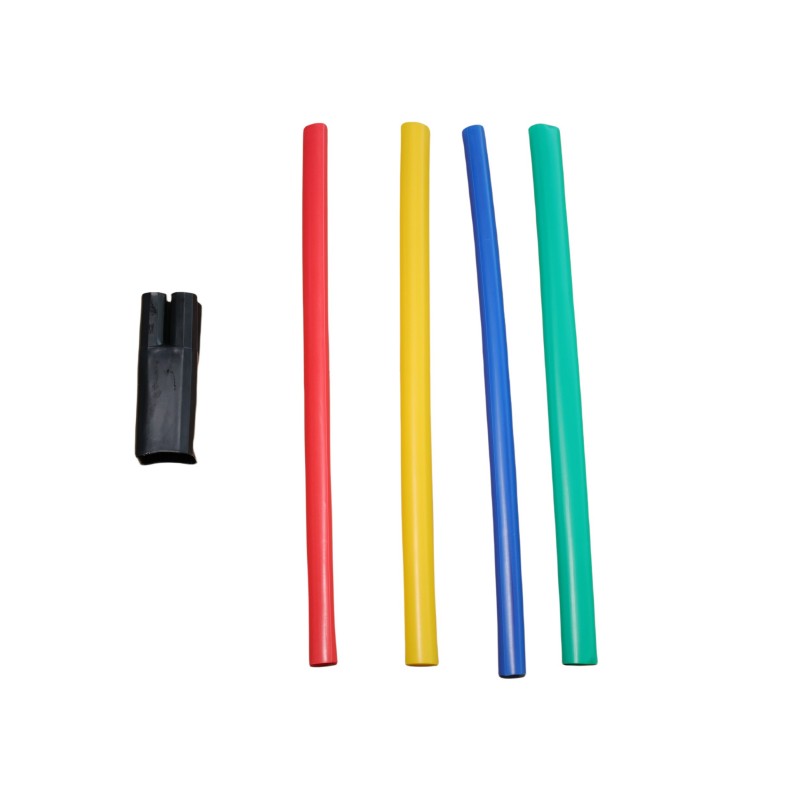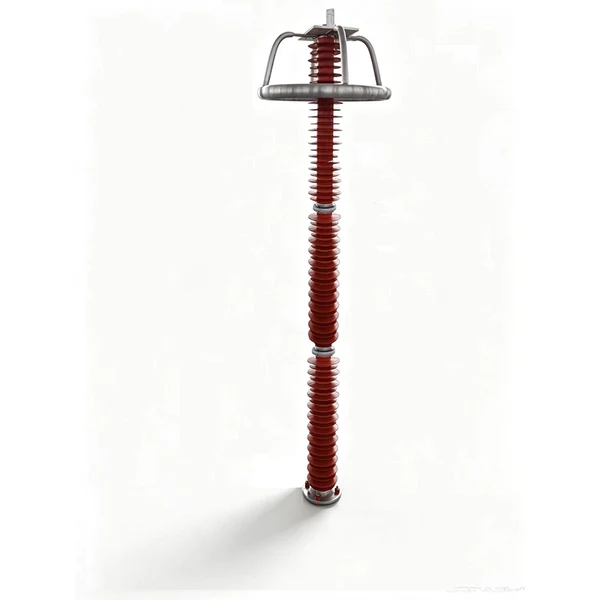

Heat shrink end sleeve: what is important to remember besides shrinkage
2025-12-23
When people talk about heat-shrinkable end sleeves, they often boil it down to the shrinking process itself - heat it up, shrink, it’s done. But in practice, the key problems and success of installation lie just beyond this obvious operation. You often look at the site - the coupling seems to be of high quality, the thermal tube fits perfectly, but after six months complaints begin. And usually the point is not in the coupling itself as a product, but in what was around it: preparation, conditions, little things that were not paid attention to.
Cable preparation is 70% of the work
There is no rush here, and these are not just words from the instructions. We're not even talking about standard cutting according to a template. It is important to feel the cable itself. For example, old paper insulation, which can crumble under the semiconducting layer, or modern cross-linked polyethylene, where it is critical to make a smooth, burr-free transition from the semiconductor. If microscopic steps or particles of shavings are left here, a point of concentration of the electric field is ensured. Over time this will come back to haunt you.
Multicore conductors with large cross-sections are especially treacherous. It seems that everything was phased correctly, the veins were separated. But if you do not make a neat and smooth bend of each core on the way to the contact tip, mechanical stress occurs. After shrinkage, the entire structure becomes monolithic, and this stress does not go away. Then, during temperature load cycles, it can “come out”, weakening the contact or even damaging the internal sealing layer of the coupling.
I always use phasing tape of different colors, even if it seems that everything is clear. In the cold, in the mud, when installation takes a long time, you can easily get confused. This is trivial, but such a mistake is one of the most expensive when handing over a project.
Sealing is not just a thermotube
The principle itselfheat shrinkable end sleevebased on sealing due to the adhesion of heat-shrinkable materials. But adhesion and adhesion are different. The cable surface must be absolutely clean and free of grease. Not “seemingly clean”, but rather treated with a special cloth with isopropyl alcohol. Dust, traces of sweat from the hands - all this worsens the adhesion of the inner adhesive layer.
There is a nuance with the shrinkage temperature. If it is overheated, the glue will leak out, the material will be “overbaked” and lose its mechanical properties. If it is not heated enough, complete shrinkage and adhesion will not occur, air pockets will remain. The moisture will then find its way. Through experience, for most high-quality couplings, I came to the use of an infrared heat gun with precise adjustment, rather than a propane torch. The flame is too aggressive, it is difficult to control the heating evenly, especially on complex profiles.
Particular attention is paid to the end part. A quality coupling always has eitherheat shrinkablea cap with a supply of glue, or a molded sealed plug. This is the weak point of many cheap solutions. If the end is not sealed, moisture will enter through the capillaries inside along the veins. I saw such cases on a 10 kV overhead line - the breakdown occurred at the end.
Mechanics and installation position
Often the design provides for an installation location, but does not provide for how the coupling will “live?” further. For example, installation on a vertical cable section. If the coupling is heavy (with large cast iron housings for outdoor installation), additional support or a cable clamp below it is necessary so that there is no constant bending load where the cable exits the coupling. Otherwise, the seal may break over time.
Another point is free shrinkage. Before heating, you need to make sure that all heat-shrinkable elements can freely decrease in diameter, nothing restricts them. It would seem nonsense. But one day I was faced with the fact that the installer applied the copper braid for grounding too tightly, “pull”, over the thermal tube going to the case. When shrinking, the tube could not sit evenly and a bubble formed. I had to cut everything down and redo it.
For external couplings, UV stabilized material is critical. An ordinary black heat-shrinkable tube without protection from the sun loses its elasticity after a few years and becomes covered with microcracks. It's a matter of durability. Manufacturers who take this seriously, e.g.Shijiazhuang Hist Electric Co.,Ltd, always list UV resistance in the technical data of their outdoor products.
Monitoring and diagnostics - what can be done right away
After installation, in addition to visual inspection and measuring the insulation resistance (which goes without saying), there is a simple but effective technique - checking for heating. Under load, in the first hours of operation, it is useful to carry out thermal imaging control. A cheap pyrometer can also show gross distortions. An overheated phase at the contact point inside the coupling is a direct indication of poor crimping or contamination of the contact surface.
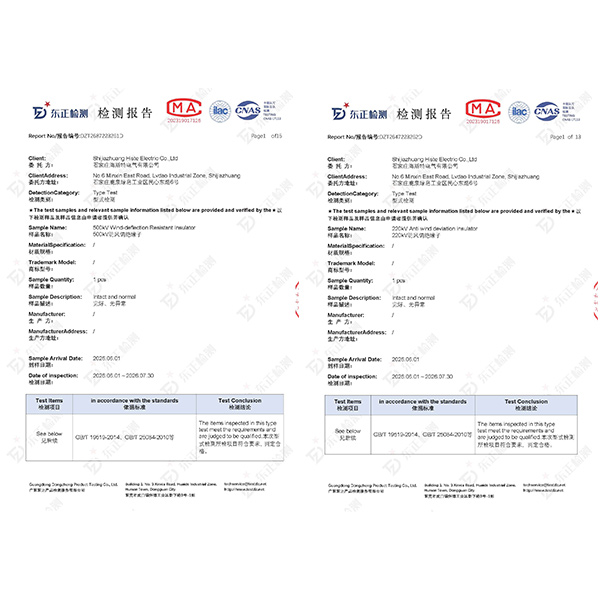
Unfortunately, internal adhesion defects or microcracks cannot be detected during installation. Here all hope lies in the quality of components and adherence to technology. Therefore, choosing a supplier is not a matter of price, but a matter of insurance against future problems. When you know that the company is the sameShijiazhuang Hist Electric Co.,Ltd, has its own patents and expertise in the field of cable fittings, this gives a certain confidence. Their websitehiste-ru.comIt is useful to study it from the point of view of technical solutions, and not just as a catalogue.
I always save the labels from the packaging of the couplings and write down the batch and dates in the installation journal. If a serial defect suddenly occurs (this happens even with top brands), this allows you to quickly identify potentially problematic components at other facilities and take preventive measures.
Mistakes that teach better than instructions
One of the most annoying is installation in wet weather without a tent. Even a fine fog or drizzle that settles on the inner adhesive layer before shrinkage will negate all sealing. I had to learn from my mistakes: now, even with the slightest humidity in the air, I deploy a mobile awning.
Another story has to do with compatibility. Not all heat-shrinkable materials and sealants are friendly with each other. We tried it somehow just to be sure. Apply additional silicone sealant on top of the branded glue from the coupling manufacturer. The result was disastrous - after a while the silicone peeled off, creating exactly the very air cavity that we wanted to avoid. Conclusion: strictly follow the manufacturer's recommendations for related materials.
And lastly, don’t skimp on contact tips. A high-quality tinned tip, crimped with the right hydraulic press with the right matrix, is the key to avoiding overheating. A coupling, even the best one, will not correct a bad contact. Everything should work as a system: prepared cable, high-quality components, proven technology. Only thenheat shrinkable end sleevewill serve her full term, which is stated in her technical passport.