
Heat-shrinkable cold-installation terminations: from myths to practice
2025-12-23
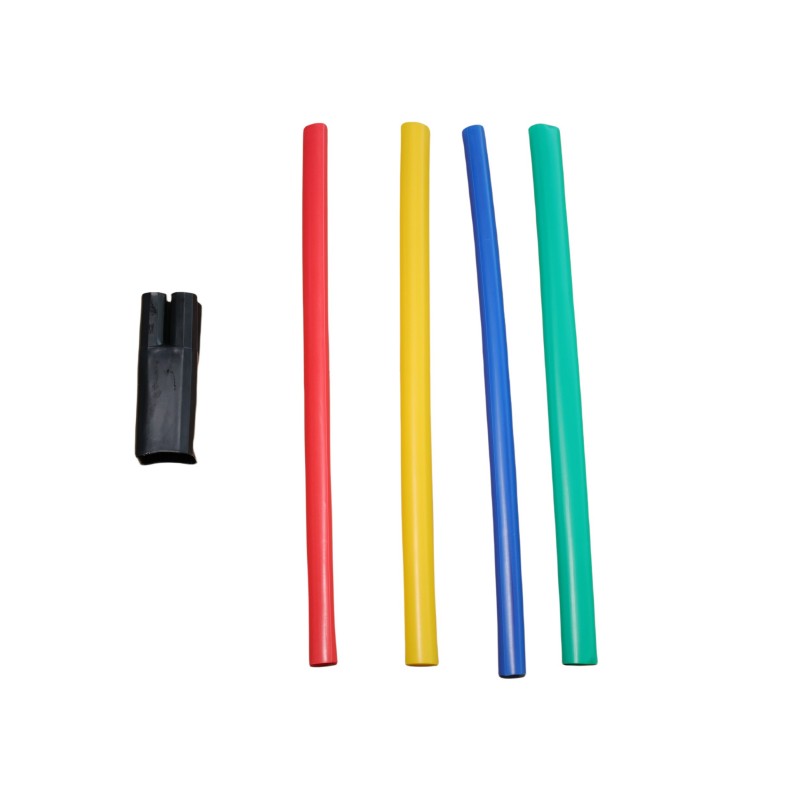
About theseheat shrinkable end sleevesThere is so much talk about cold editing. Many people still believe that since it is “thermal”, it means that it is necessary to work with a burner. And here is cold editing. And immediately skepticism: they say, is it reliable? From my own experience I will say that it is not only reliable, but in some situations it is the only reasonable option. Especially when you work in cramped conditions, at sites with increased fire safety requirements, or simply when it is not possible to deploy a full-fledged thermal installation. But there are also some nuances, of course. Not the kind of thing that you can stick in haphazardly and forget.
What does “cold editing” actually mean?
The main thing here is not to confuse. ?Cold? - this is not about the ambient temperature, but about the installation technology. No open flames. It is based on mechanical crimping or, more often, the use of special elastic components with a memory effect, which tightly crimp the cable when the transport sleeve or backing is removed. Sometimes a special mounting gel is included to fill cavities and improve adhesion/sealing.
A common mistake is to neglect cable preparation. I cleaned the core, removed the insulation, and it seems that the coupling can be tightened. What if the cut was uneven? What if there are shavings left from cutting the screen? All this under the crimped coupling will come back to haunt you later. I always take an extra five minutes to run an abrasive belt (not a rough one!) over the insulation in the contact area and thoroughly remove all particles. Dryness and cleanliness are already half the success of installation.
And here's another thing: not everyone is “cold”? the couplings are the same. There are those that are simply mechanically crimped with clamps, and there are those that use a multi-layer structure with sealing layers that are activated by tension. The latter, as a rule, are more reliable for outdoor use, where a barrier against moisture is important. I look at the assortment, for example,Shijiazhuang Hist Electric Co.,Ltd— they have several types in their line, for different sections and conditions. It is clear that the manufacturer is in the know and understands that there is no universal solution.
Where does this really help? From practice
I had a facility, a substation in an operating workshop. Hot work is strictly prohibited. Installing classic heat shrink means coordinating a work permit, removing equipment, setting up a firing post. Deadlines are running out. To terminate the 10 kV cable, we used a cold-mounted coupling. They worked without disconnecting neighboring lines, which was critical.
The key point is the accuracy of measurements. There is a slight play with heat shrink, you can warm it up and tighten it. Here, each layer is tensioned sequentially, and if you make a mistake with the stripping length by a couple of centimeters, the entire structure may sit crookedly and the sealing gaskets will not fit into place. First I had to “get my hand in” on the training section of the cable. By the way, the manufacturer’s passport always contains diagrams, but they are idealized. In real life, the cable may be stiffer and the space may be smaller.
Testing is required after installation. Not only with a megger for insulation breakdown, but also, if possible, checking for partial discharges. Cold couplings are often criticized for possible microcavities inside. A good manufacturer solves this problem through design and materials. The tests at that facility went well, the coupling has been in use for three years without any complaints. The customer was surprised by the speed of work.
Pitfalls and how to get around them
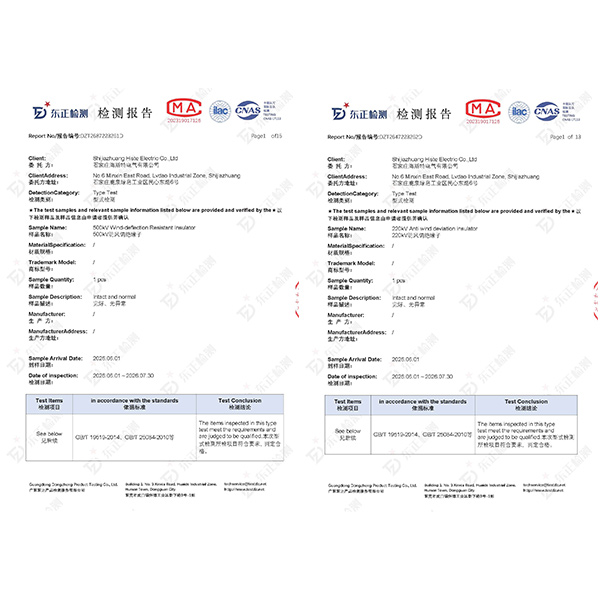
The first stone is the choice of the manufacturer. The market is flooded with cheap solutions where elastic materials lose their shape memory over time or harden in the cold. This is the path to loss of tightness and breakdown. Therefore, I always look at the availability of real certificates (not just declarations!), and at the company’s experience. When I see that the company is the sameShijiazhuang Hist Electric Co.,Ltd, claims dozens of patents and expertise in the field of cable fittings, this inspires more confidence. This means there is R&D, there is something to work on.
The second is installation in cold weather. Yes, the technology is cold, but the materials have an installation temperature range. If it is -20°C outside, some polymer elements become rigid and difficult to stretch without damaging them. The solution is to heat the packages of components indoors or use a heating tent on site. Do not use open heaters for this under any circumstances!
The third stone is staff training. Installers who are used to the burner initially treat such couplings with distrust and may skip a step. We had a case where we forgot to remove the inner transport film from the contact tube. The coupling is mounted, tests show strange parameters. I had to open it - and there was film. Now we have a rule: editing according to the checklist, even if you do it for the hundredth time.
Comparison with classic heat shrink: not competition, but an alternative
These technologies should not be opposed. These are different tools for different tasks. The classic heat-shrinkable sleeve is time-tested reliability, but with reservations about the quality of installation (overheating, underheating) and work conditions.
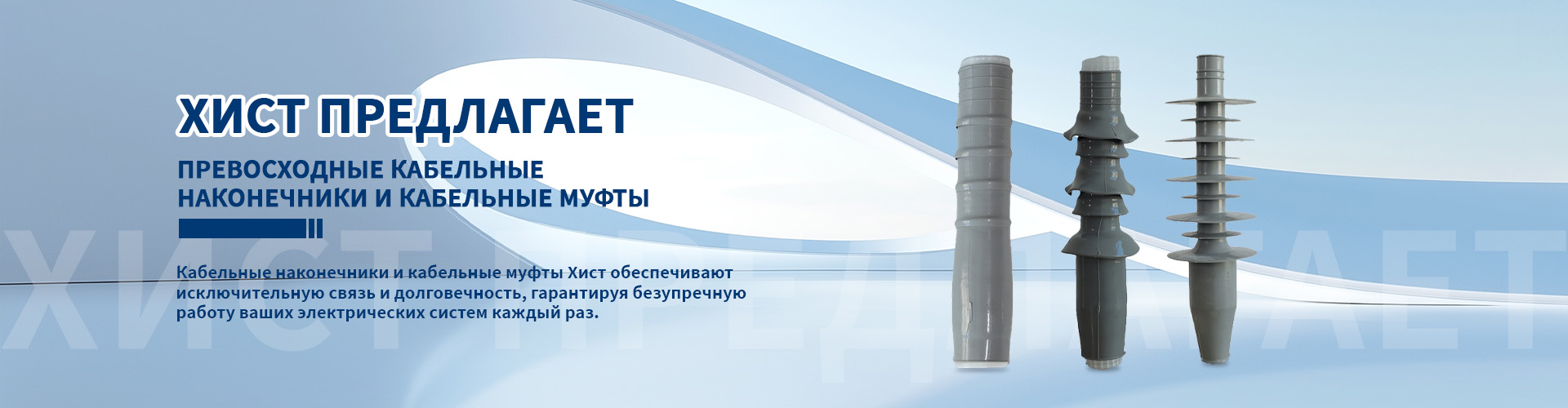
Heat shrinkable end sleeve (cold installation)is a solution for difficult conditions: fire hazardous areas, cramped cabinets, urgent repairs, live work on adjacent phases. Its advantage is the predictability of the result. There is no human factor with the burner. If all steps are followed according to the instructions, the result will be stable.
The downside, perhaps, is the less universal form. Heat shrinkage repeats complex terrain due to shrinkage. A cold coupling depends more on the accuracy of its original shape and elasticity. Therefore, for cables of non-standard configuration or with large irregularities, classics are still more often used.
Looking to the future and choosing a supplier
Materials technologies do not stand still. New polymers with improved shape memory, greater temperature range and UV resistance are emerging for outdoor applications. I think the share of cold installation will grow, especially in medium voltage distribution networks.
When choosing a supplier, I pay attention not only to price. Technical support, the availability of detailed manuals, video instructions, as well as the opportunity to get advice on a non-standard case are important. When a manufacturer like mentionedhiste-ru.com, positions itself as an expert with patents, this presupposes the presence of such expertise. The willingness to provide independent test reports for specific impacts (temperature-humidity cycles, UV resistance, current load) is what distinguishes a serious player.
As a result,Heat-shrinkable cold mount end sleeve- this is not “ersatz”, but a full-fledged, high-tech product. Its success depends 100% on two things: the quality of the product itself from the manufacturer and scrupulous adherence to installation technology. If both conditions are met, it becomes an indispensable tool in the arsenal of any electrician working with modern cable lines. The main thing is not to be afraid to try and do the job conscientiously.