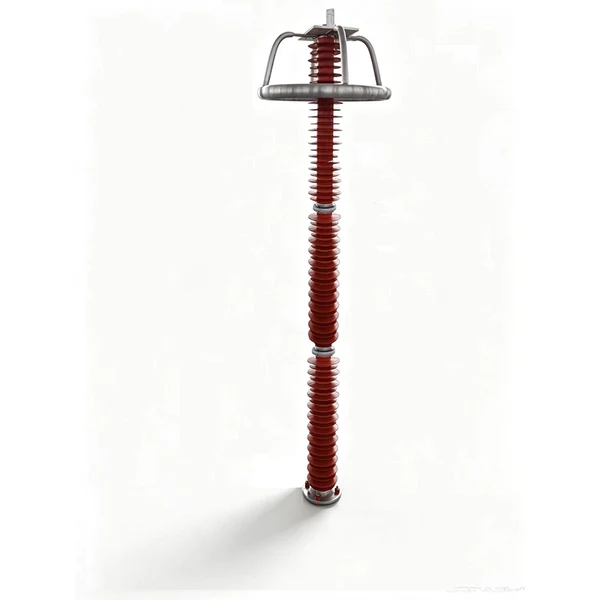

Separator: not just a piece of metal on a pole
2025-12-18
When people talk about high-voltage lines, everyone remembers insulators. And about the separator - often only in the context of “well, is there some kind of part for repair?”. In fact, this is one of the most critical elements in linear fittings from a mechanical and electrical point of view. If the insulator holds, then the separator insures and allows you to work without de-energizing the entire line. Many designers still approach its selection according to the residual principle, but in vain. Then, on the highway, problems begin: it does not work at the right moment, jams, or, worse, is destroyed when the wire breaks in a way that is not intended.
What is really hidden behind the term?
If we discard educational formulations, then for me, as for a person who has been involved in testing and implementation for many years,separatoris, first of all, a manageable weak link. Its task is to disconnect in a strictly defined place and under predictable conditions. Usually this is an emergency wire break. But here the first subtlety begins: these conditions on paper and in reality are different. In the project, loads are calculated based on ideal tension and pure tension. In practice, there is always vibration (galping), wind swaying, and icing on the highway. The separator mechanism is constantly under dynamic, cyclic load. And his ?weakness? should be designed specifically for this mode, and not just for a static break.
The second key aspect is electrical. At the moment of operation there should not be a stable arc that could burn out adjacent phases or damage the insulator. The design of the contact group (which is often just two lugs with a shear pin) should ensure quick and final separation. In the laboratory of Shijiazhuang Hist Electric LLC we once tested a batch of separators from one supplier. According to the passport, everything is perfect: mechanical tensile strength, electrical resistance. But when simulating a break with a short circuit current of 20 kA, the arc did not go out, but wandered around the body, burning through it. It turned out that the material of the contact elements had unsuitable erosion resistance. We had to work with engineers to refine the alloy composition and geometry.
Hence the main conclusion that I made for myself: the separator needs to be evaluated only in conjunction with a specific type of insulator, wire and even climatic region. There are almost no universal solutions here. The technical expertise that our company possesses is precisely based on understanding these relationships, and not on selling parts from a catalog.
The laboratory is the place where understanding is born
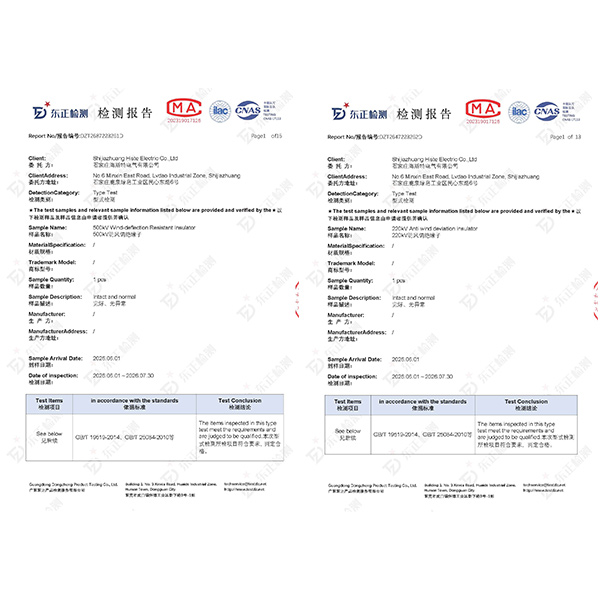
Our laboratory in Northern China is not just for show. That's where we "break" products to understand how they will behave in 10-15 years on the track. There is a special test cycle with separators. In addition to standard mechanical tensile and compression tests, we always carry out cyclic dynamic tests. Simply put, we shake the assembled unit “insulator-separator-wire” for a long time and tediously. with a given amplitude and frequency. The goal is to see if a fatigue crack will appear in the body of the pin or in the eye before the estimated time.
One of the most significant cases involved an order for a high-mountain region with strong winds. The customer sent his technical specifications based on foreign standards. We made samples, they passed all formal checks. But our chief engineer, an old specialist with installation experience at BAM, insisted on an additional test: icing + dynamic load. We simulated the growth of ice on the wire and the subsequent sharp gust of wind. The separator pin, which was supposed to be cut off when broken, burst in half even at the icing stage due to the increased bending moment. The design did not take into account combined effects. We had to completely revise the geometry and material, strengthen the eye so that the pin would work specifically for shearing and not for breaking. Without such a laboratory and the right to experiment, this joint would have surfaced only in an accident.
That is why having a powerful testing base capable of working with voltages up to 1000 kV is not marketing, but a necessity. Because you can’t simulate how an arc behaves on a real separator under real voltage on a computer. This is the only way to select the optimal materials and configurations for different “difficult construction conditions,” as we say in our company description.
Installation errors that ruin all the work
You can make an ideal separator from an engineering point of view, but it will be ruined in the field. The most common mistake is incorrect orientation. Many installers believe that since this is a symmetrical part, no matter how you place it, it will still work. But no. The separator has a so-called “operating plane”. If it is rotated 90 degrees relative to the wire tension vector, the shear moment of the pin will change. It can either work ahead of time (in strong winds, for example), or, conversely, jam and not disconnect if it breaks.
The second problem is excessive tightening. The pin or safety element inside the separator is designed for a specific tightening torque. ?Power? an installer who is accustomed to pulling with wrenches can simply deform it, partially destroying the calibrated cut section. As a result, the mechanical characteristic is lost. We have even begun to supply some models with torque wrenches included and provide short training sessions for large customers. This reduces the number of complaints significantly.
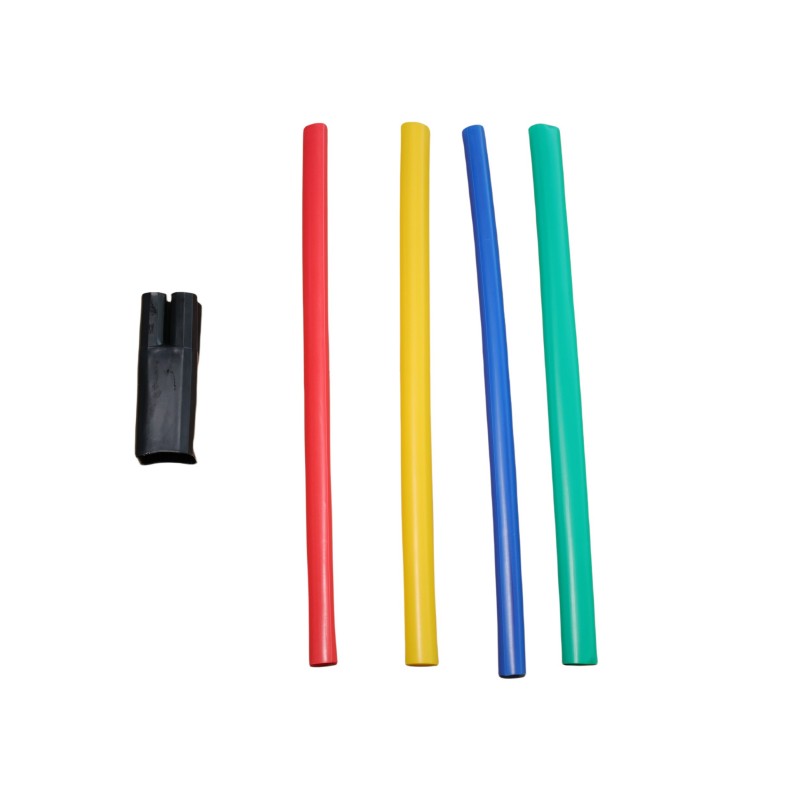
We also had a curious, but instructive incident. At one of the facilities in Siberia, the separators worked safely during the first serious ice storm, although there was no wire breakage. We arrived and looked: everything was installed correctly. It turned out that local birds (magpies, it seems) were actively pecking at the brightly colored polymer protective cap on the pin, mistaking it for something edible. Their efforts and constant vibration from the wind weakened the structure, which led to premature shearing. After that, for such regions we switched to less “appetizing” ones. dark gray or black colors and slightly changed the shape of the cap.
Interaction with an insulator is a system, not a set of parts
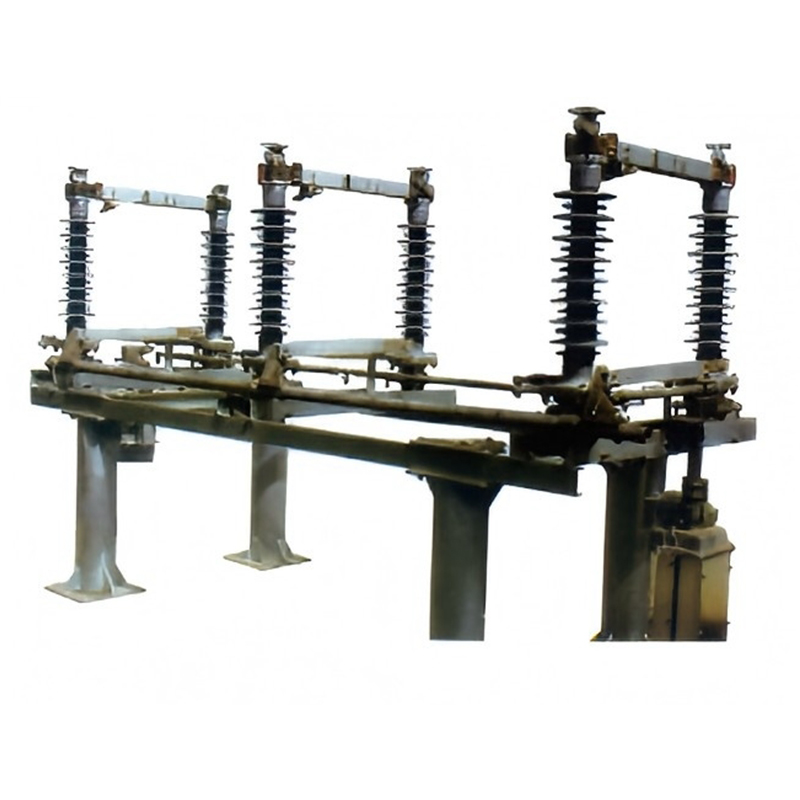
Separately, I would like to emphasize the point of consistency. The separator almost never works on its own. It is part of an assembly with a suspension or support insulator. And here not only mechanical, but also electrical compatibility is critical. For example, we have a range of isolating switches and disconnectors. When a separator is used in their design, the requirements for operating accuracy and dielectric properties after disconnection are an order of magnitude higher.
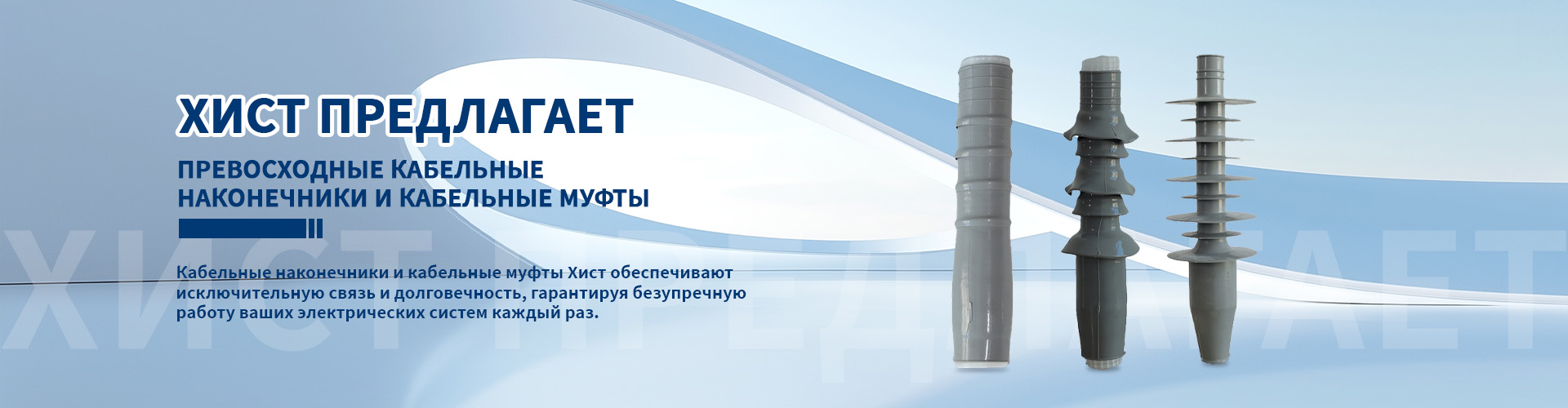
As a manufacturer of cable accessories and related products, we often offer a comprehensive solution. Not just “here are the separators according to the drawing?”, but a complete calculation of the fastening unit: recommended type of insulator, method of fastening, mounting devices, even a schedule for preventive visual inspection. Because they saw it as an attempt to save money on hardware. $50 resulted in damage to the insulator costing several thousand and an unscheduled shutdown of the line.
On the websiteShijiazhuang Hist Electric Co.,LtdIt’s not just that we mention “integrated construction solutions”. This is exactly what this is about. A client from a region with high seismic activity will receive one type of unit (with an increased dynamic margin and a different angle of operation of the separator), and for a windy coastal area - another (with enhanced protection against corrosion and taking into account salt fogs). The patented developments that are mentioned in the description are often born precisely from the need to solve such a specific, non-standard problem at the site of operation.
Looking to the future: what else can be improved
Nowadays there is a lot of talk about “smart grids”. And the separator here, too, should not remain a dull mechanical part. We are experimenting with options that could provide a trigger signal. Not only did the wire fall, but the dispatcher received the exact coordinates of the break area thanks to the sensor in the separator. So far, the main problem is power supply and the resistance of such electronics to extreme temperatures and electromagnetic interference. But work is underway.
Another direction is materials. Composite polymers, which we actively use in insulators, are gradually coming to reinforcement. For the separator, this can mean lighter construction and better resistance to fatigue and corrosion. But there is a nuance: the behavior of the composite under long-term dynamic loading and its aging in an assembly with metal parts is a topic for a separate in-depth study. Our doctoral students and graduate students are engaged in similar applied problems.
In the end, back to the beginning. The separator is not a consumable and not a simple staple. This is a high-precision safety mechanism, which determines the locality of the accident and the speed of power restoration. Its selection, testing and installation require the most serious, systematic approach. And the experience that accumulates through dozens of implemented projects in different parts of the world and through the analysis of each abnormal operation is priceless. It is this experience, and not just machines, that allows us to offer customers truly reliable solutions, and not just goods from a warehouse.